‘The negatively signed evaluation of the East–West dichotomy in Prohászka is…the legacy of 18th–19th-century Western European thought—the French/Scottish Enlightenment and German Idealism. The turning point was brought about mostly by the Enlightenment…and the fetishization of technical progress. It was from…
Beyond the ‘official’ Geistesgeschichte, national self-examination and ‘fate science’ reached psychological and even ontological depths among radical, philosophically inclined intellectual historians. Key works of the era emerged at the intersection of depth psychology, the cultural morphology of Spranger and Keyserling,…
‘The task of developing a new theoretical framework for political realism through the lens of moderate metaphysical realism remains unfinished. Far from being a purely abstract endeavour, the aim is for this project to have a profound impact on real-world…
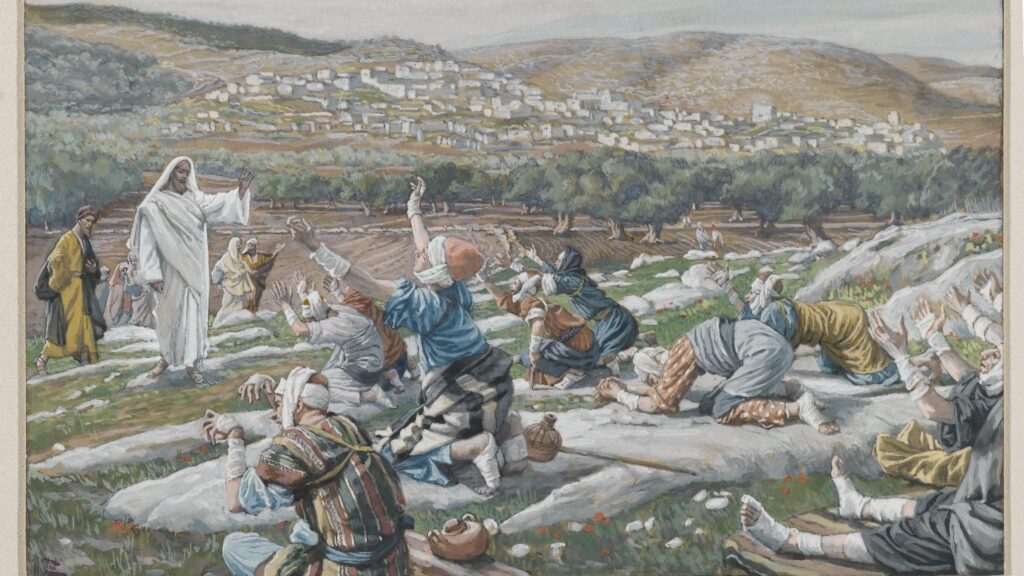
Only one leper returned to give thanks to Jesus. Likewise, at Easter we may take a little time to reflect on the things of God, and then rush back onto our own paths. Yet the cost of the resurrection was…
‘Roger Scruton does not place his faith in cosmopolitanism, but rather in the conviction that the path toward humanity leads through the nation. His critique is by no means directed against openness, but against oikophobia. At the same time, it…
‘Only in these ways will we be able to recreate an elite that shows us how a life with books should be lived and, in doing so, once again transmits to future generations the cultural heritage that Gómez spent his…
‘Creators depict aristocratic power primarily as a pragmatic, Machiavellian struggle; the problem with this is not that it is unrealistic, but that it is exclusive.’…
‘Despite denominational, political, or ideological divisions, and despite the hyper-pluralism evident in the public sphere, at the level of mental habitus, patterns of thought, and underlying assumptions, there exists in Hungarian society a fundamental unity derived from cultural Christianity…A similar…
‘Europe has forgotten that it is not discourse but song that shapes humanity; not a tweet but a Kyrie; not opinion but melody bowing to the depth of heritage. In Zagreb and Sinj, a people sang, and in their voices…
‘Behind historical changes, there simply must exist an “invisible constant” that ensures continuity despite biological-physical changes—and sometimes even despite a change in language. This can be called a metaphysical character: a deep spiritual structure independent of time, space, and biology,…
‘All enemies of Europe are enemies of freedom. Standing up for the preservation of European freedom and defending it in solidarity against enemies from without and within is therefore probably the most important task of conservative politics in and for…
‘This genuine, organic conception of evolution stands in full harmony with a spiritually grounded understanding of the universe. Just as society unfolds its latent traditions, and a seed unfolds the tree inherent within it, so the entire created world unfolds…
‘Time is in fact the hero of the plot…Given so much time, the “impossible” becomes possible, the possible probable, and the probable virtually certain. One has only to wait: time itself performs the miracles.’…
‘Modern natural science started from the seemingly noble self-limitation of seeking answers to the question of how the world works, leaving the great questions of why to philosophy and theology. As we can see, this was Darwin’s original objective as…
‘Unveiling the “religion of electricity” uncovers a narrative embedded in modernity which challenges reductive secularization theories, especially Max Weber’s classic portrayal. The “religion of electricity” embodies both the scientification of religion and the re-enchantment of the world, offering intriguing anomalies…
‘The American Republic in the first half of the 19th century gradually drifted away from the Founders’ original vision and embarked on the path of modern mass democracy. The final result of this, paradoxically, became exactly what the Founders had…
‘School, therefore, never ends: the modern citizen is the subject of re-education from the cradle to the grave, stripped of the past so that he may obediently march toward the technological utopia.’…
‘De Maistre was not a practitioner of political anthropology, but rather its instructive forerunner. As such, his writings may provide extremely important and useful contributions to its expansion and reinterpretation.’…
‘Learning, the moral and intellectual basis of human life, must be readapted and reopened to the world of value and inspiration. Education must once again become Bildung.’…
‘…without intellectual and political leaders who are able and daring enough to go beyond the surface-level symptoms of the infocracy, our capacity to reform society and adapt to a post-infocratic world becomes increasingly limited. It would be like fighting the…
‘The conservative commitment to national sovereignty and democratic accountability ensures that governance remains responsive to the citizens it serves, rather than distant ideological or bureaucratic elites. This maintains a critical check on the imposition of one-size-fits-all moral doctrines, preserving cultural…
‘Since the masses are easily manipulated, democracy is the natural breeding ground for demagogues, and a straight path leads from it to totalitarianism.’…
‘After the modern revolutions destroyed traditional, hierarchical structures, the resulting vacuum was filled…by “bureaucratic authority”. The modern state bureaucracy is the political operating system of the Heideggerian Enframing: a rational, impersonal machine which…liquidates all intermediate, organic communities and freedoms in…
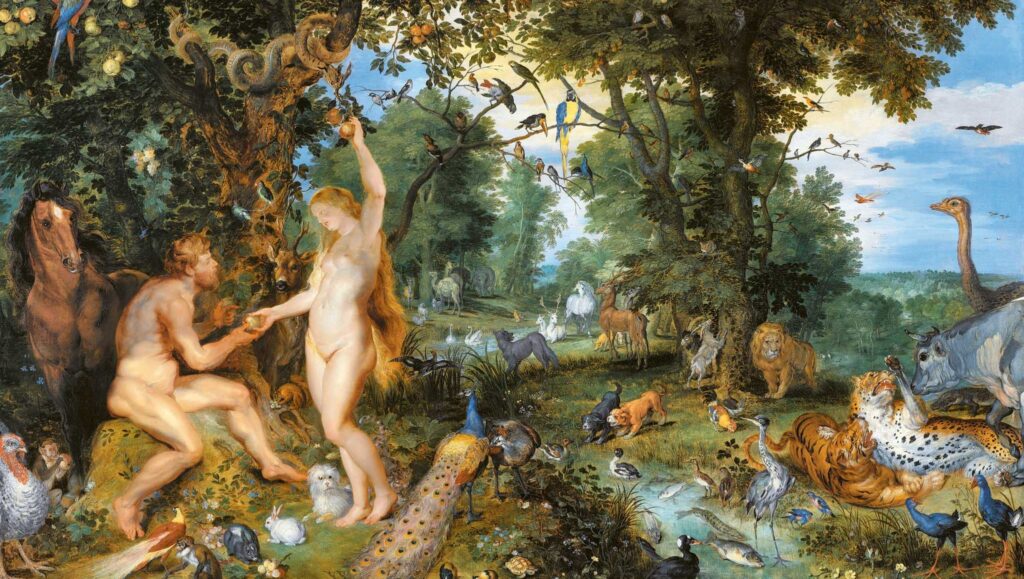
Of course, every human life is subject to the passage of time; no human body can survive once it has grown old, worn out, and its biological functions have ceased. Yet, according to the Bible, no human body dies permanently—everyone…
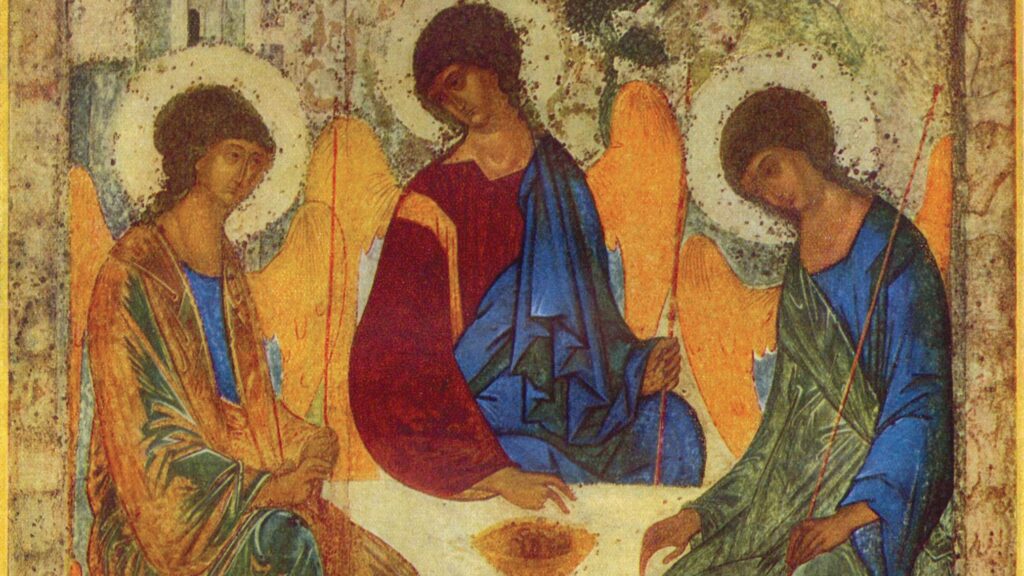
‘In an age dominated by the immediacy of scrolling, the icon insists upon stillness. Where modern images reflect narcissism, icons guide the viewer toward transcendence. The practice of looking reverently at an icon can serve as a powerful antidote to…
‘The moment of birth for the modern myth of progress is when Western thought retained the linear time-scheme of Christianity but radically reinterpreted its content. This “humanist turn” was essentially a process of secularization, during which divine providence was replaced…
‘In our own “post-liberal” moment, Thatcher’s Arminian liberalism deserves a second look. Liberalism, rightly understood, was never meant to be the cult of the autonomous self. It was the civic translation of a theological truth: that we are created free…
‘The problem is not whether progress has material benefits—it would be foolish to deny them—but that the concept of progress has forced upon us a materialist and quantitative worldview that is incapable of measuring, or even perceiving, what was lost…
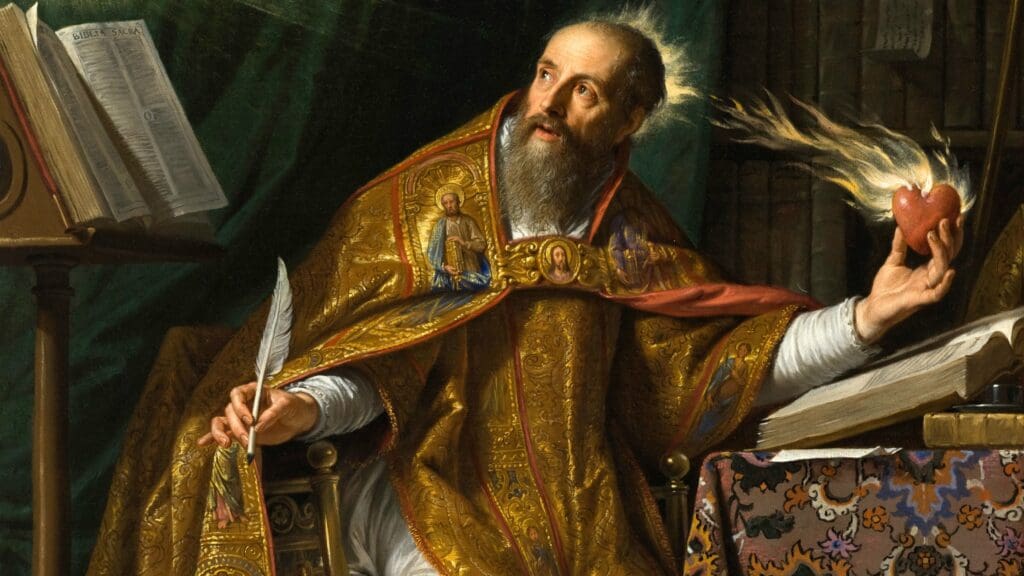
‘Whereas Augustine’s inner self pointed beyond itself to God, Rousseau’s pointed only inward. Conscience, no longer an echo of divine law, became the voice of the self. Politics, in turn, had to be remade in its image: the true will…
‘True freedom is a paradox: we are most free when we accept the burdens of responsibility. A society that worships liberty without responsibility ends with neither. But a society that remembers responsibility as the guardian of liberty secures both.’…
‘Lévy is ultimately boxed within the same pre-October 7 suppositions that paralyse legacy Jewish institutions cornered by anti-Zionist Wokeism yet unable to broaden their appeal or become agents of larger coalitions…Yet standing on those same rigid principles blinds Lévy to…
‘Without Christianity, there are no human rights, nor any democracy. Therefore, Fukuyama’s “Last Man” is not the triumph of human history at all, but quite the opposite: as he puts, that will indeed be the “End of History” for humanity….
‘Paradoxically, it appears that democracy can only sustain and protect itself from collapse—whether through tyranny or chaos—by relying on elements that are not themselves democratic. It often seems easier to justify democracy with a quasi-mystical hypothesis than with one grounded…
‘It is not an easy task to clean the concept of democracy from the secondary meanings that have been imposed on it during more than two centuries of modern usage. I will not attempt to solve this task; instead, I…
‘Liberalism…had reached its full potential by the twentieth century. It has achieved its highest goals and, in doing so, has cut the human person off from tradition, religion, and natural communities. The struggles of the first progressive ideology seem to…
‘The fleshy vernacular of this new version of the Inferno forces us to slow down and see, feel, taste, smell, and almost touch the reality of our sin—as Christ did in the Incarnation. Perfect sight awaits us in paradise, but…
‘UNESCO’s programming in the areas of education and the social and human sciences, combined with the work of the UN Office of the High Commissioner on Human Rights and international human rights treaty body committees, transformed the aspirational UDHR into…
‘It can no longer be said that the individual manqué is merely a “shadow”; it appears, rather, to be the norm. Today, it is worth reflecting on the extent to which, since Oakeshott’s death, the European experience has shifted from…
‘[T]he…West…has finally reached the Baudrillardian singularity, and become completely absorbed by a self-referential simulation that its own leaders have created. This simulation continues to insulate the leaders of the West, but as rays of underlying reality start to shine through…
‘The mass man is incapable of making authentic, personal decisions in situations of crisis or autonomy. For this reason, he requires a leader—someone who can think, decide, and act on his behalf. This leader makes the mass man aware of…
‘In the twenty-first century, it might be thought quixotic…to be highlighting ideas about the purpose of universities that have anything to do with conservatism…The dominance of a progressive liberal “idea of a University” should not, however, let us forget that…
‘In an age where a phone tells better time than any Rolex, watches are thriving—not despite their obsolescence, but because of it. They are beautiful, technical, embodied objects in an abstract and disposable world. They are the final adornment, the…
‘Leo XIII hinted…that Christians and non-Christians alike…can only benefit from natural law…because it “is universally valid apart from and above other more debatable beliefs, [and] constitutes the compass by which to take our bearings in legislating and acting, particularly on…
‘China is looking for a new moral synthesis of its Confucian and Western political culture that could stabilize Chinese society and take its “positive union” to new heights. This could be one of the most constructive dialogues between China and…
‘Can Western nations hope to resurrect Western hegemony while remaining so dysfunctional domestically? Deeper still: are some of these domestic dysfunctions a direct result of their role in maintaining a liberal empire in its late stages? Viewed this way, the…
‘As conservatives, we understand that the world is a broken and imperfect historical place. We cannot go back in time, but we can focus on building a future that is more conscious of the dangers posed by the neo-Durkheimian order…
‘…the idea of a Creator conceived and represented in vulgar theological approaches as a quasi-human person is not only unacceptable today but also explicitly harmful to the contemporary expressions and life-opportunities of religion, fostering further denial and turning away in…
‘The idea of the survivability of death is a key problem, because in its light the whole of life takes on a completely different meaning: if it is possible, nothing else is more important than this; if it is not…
‘…the ideas of Pál Kecskés on education and pedagogy are fundamentally rooted in Christian social theory, which seeks to envision an ideal society from a Christian perspective. His reflections remain relevant today, in a time when individuals…have perhaps never had…
‘In Hungary, unique master narratives have emerged over the centuries that live with us to this day. We can run into them everywhere in the most diverse segments of life: in culture, in education, even in politics. What exactly does…
‘We must resist the anthropology that reduces our humanity to a commodity of flesh, an anthropology that hollows out our interiority, an ontology that will not permit that interiority to have any substantial existence. Our task is not to preserve…
‘It is no longer clear where the boundaries between nature and culture, human and non-human, artificial and natural lie. In the face of this great uncertainty, we need to rethink fundamental questions such as what the social order is. It…
‘Applying Christian theology and ethics to international relations is now an acutely important activity. The hopeful realism of Reinhold Niebuhr offers one way of recovering a Christian approach to the crisis that is hurtling towards our civilization at a terrifying…
‘Orbán and the Fidesz leadership are seeking lasting change to Hungarian politics and culture. They recognize that pro-life and pro-family issues are not just legal disputes; they are culture-wide struggles, and they must be addressed as such. Hungarian conservatives are…
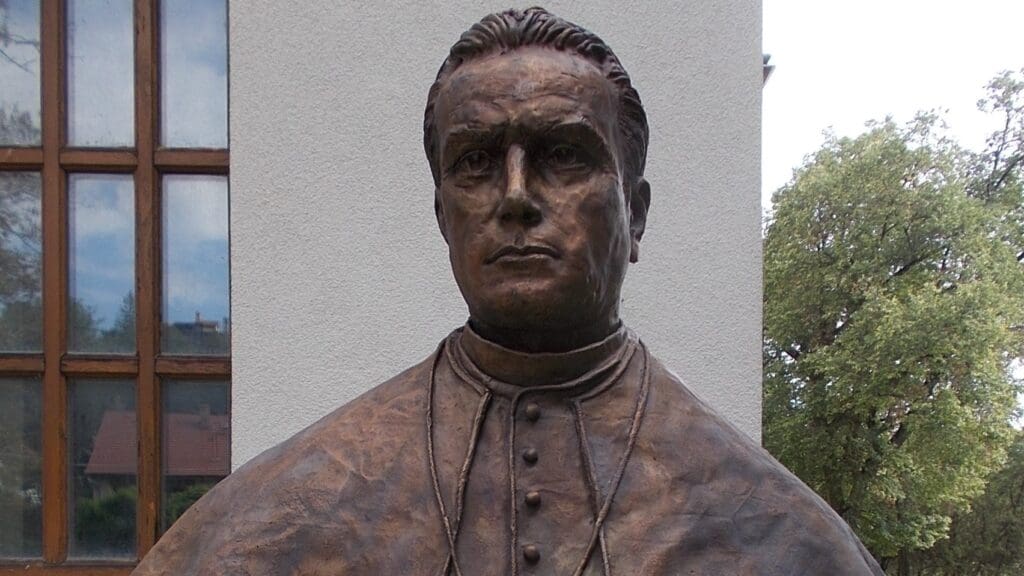
‘According to Prohászka, in modernity the tradition of earlier, non-atheistic ages does not die out completely, so that modernity, despite its distinctness, also draws on expressions of earlier forms of cultural life. If a positive turn is to be made,…
‘Prohászka have perceived that the blaring confidence of progressivist thought reflected only its inner emptiness, its blindness, its superficiality, its logical and philosophical inconsistency. What follows from these “new principles” is, above all, a tragedy of human existence, more serious…
‘As Márton Molnár puts it, “Prohászka’s work covers three major—closely related—themes: educational science and the history of education…the theoretical issues of the philosophy of culture; and the problems of the modern cultural crisis.” In this paper, we focus on this…
‘Strauss points away from the modern project of progressive enlightenment and toward an individual ascent out of modernity. Neither of the two premodern ways of life, biblical or philosophic, partakes of the modern hope in social progress, nor in the…
‘Without culture, Eliot argues, there is no point at all in being human, and it is culture that justifies the content of our existence on Earth for the generations that follow us. “Culture may even be described simply as that…
‘Whether through Scripture, the teachings of the Church, or life experience, Christians learn that no relationship or physical place makes them truly at home. For Christians, it has always been challenging to find the right balance between our hope in…
‘According to the Chinese zodiac, 2025 is the year of the snake, which symbolizes change and transformation. It thus may not be a coincidence that Donald Trump, who campaigned on a promise to bring about drastic changes in Washington, commenced…
‘By rediscovering fundamental needs and values, we will eventually rediscover the need and motivation for having more children. This is a collective project that involves, first of all, ordinary people, philosophers, the church, artists, psychologists, and the government.’…
‘People generally agree that no human society is “without culture”. The concept has been defined in many different ways. The first appearance of the term culture is attributed to Cicero, who used the word in the sense of “cultivation of…
‘Here the problem of postmodern thinking returns. If there is no truth, since everything is relative and free (but if there is an absolute truth, Derrida calls it totalitarianism), then in the marketplace of ideas, truth—since it does not exist—cannot…
‘Politically, however, it is not impossible for a state to decide that it would be better, both for children and for the country, to give schools freedom to develop educational approaches that follow liberal education principles, whether within the state…
‘Whereas in pre-modern Western culture pride and self-respect were derived from involvement in family, community, work and religion, individuals are nowadays left with nothing but their individualism and inner experiences…When this is insufficient, many people attempt to find their salvation…in…
‘Christianity from its beginnings has presented something new with regard to political life: a certain indifference, if I may put it that way, to the political regime. That is, it enjoins rendering unto Caesar the things that are Caesar’s, and…
‘Despite the different—and certainly debatable—approaches and priorities in specific policy areas, the fundamental objectives of conservative parties largely align. Public discourse and media representation in the West sometimes portray the self-determined policymaking of conservative governments in a polarized manner, focusing…
‘It is the metaphysical distinction between act and potency that brings depth to being, since it reveals to us that being is not just a fact that is or is not in a shallow binary fashion, but is something that…
‘As the assisted dying question turns once again into a contestation of intolerable pains and grotesque moral outrages, we should take a moment to think of a bigger picture. To recall that it is a man-made instrument. It is not…
‘As Christmas approaches, even the most steadfast conservative is faced with a profound seasonal dilemma: should one opt for an artificial tree or remain loyal to the natural variety? The question is more than a practical matter—it is imbued with…
‘With the Second Vatican Council a new kind of theology—the so called nouvelle théologie —stepped inside the Church and started to play a decisive role in it. Its main authors like Marie-Dominique Chenu and Henri De Lubac emphasized that the…
‘A simple example of restraining evil, which works quite well, are the referees who manage athletic contests. They simply enforce the rules so that order is maintained. They do not help either team win, they do not help the injured,…
‘Freedom, understood concretely, is a civilizational, not a natural, construct. This essentially conservative argument could provide the very basis for the continuation of a certain political tradition without which we, modern souls, would live in a much more cruel and…
‘Ortega’s image of what members of his ideal elite should be like derives from his wider philosophy. His spells at German universities made him initially a fervent neo-Kantian who, seeing the world through the lens of transcendental idealism, believed in…
‘The Third Budapest School strives to debate the one-sided, analytical, progressive, nihilistic aspirations that dominate American intellectual life, and to cultivate initiatives based on classical European philosophy. It does this by stimulating the formulation of important questions: in contrast to…
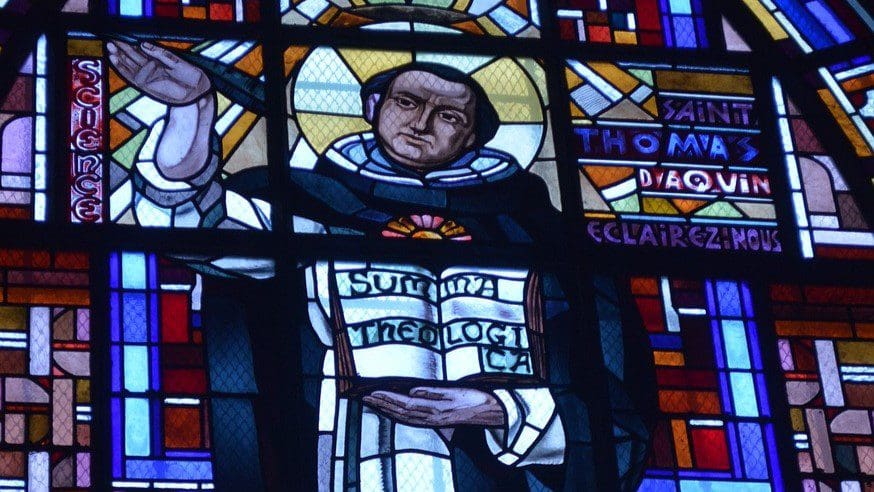
‘There is one sense in which Aquinas certainly did not believe in worlds. This is the sense in which certain Greek philosophers held that there is an infinity of worlds…Aquinas asserts what he calls the “unity of the world”. He…
Policies such as pro-family tax cuts, housing programmes, child benefits etc., all resulting in a kind of family income system that aims to reduce the harm inflicted on families by a Ricardian conception of the economy (which, obviously, cannot be…
‘On our part, we doubt that “history of ideas” as a methodologically coherent discipline existed in Hungary between the two world wars…Nevertheless, their work is undoubtedly a prime example of an attempt at the creation of a conservative-oriented social science….
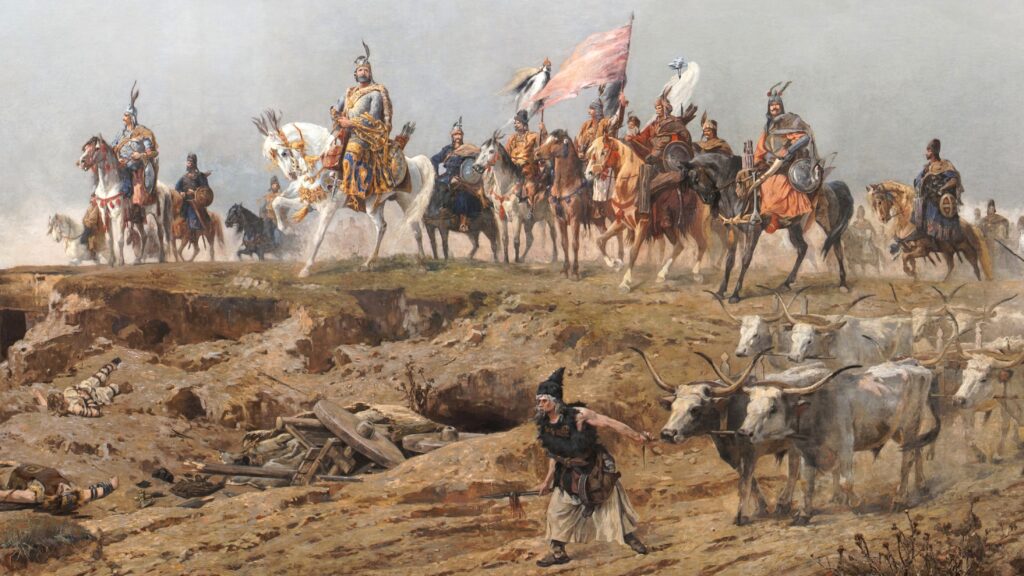
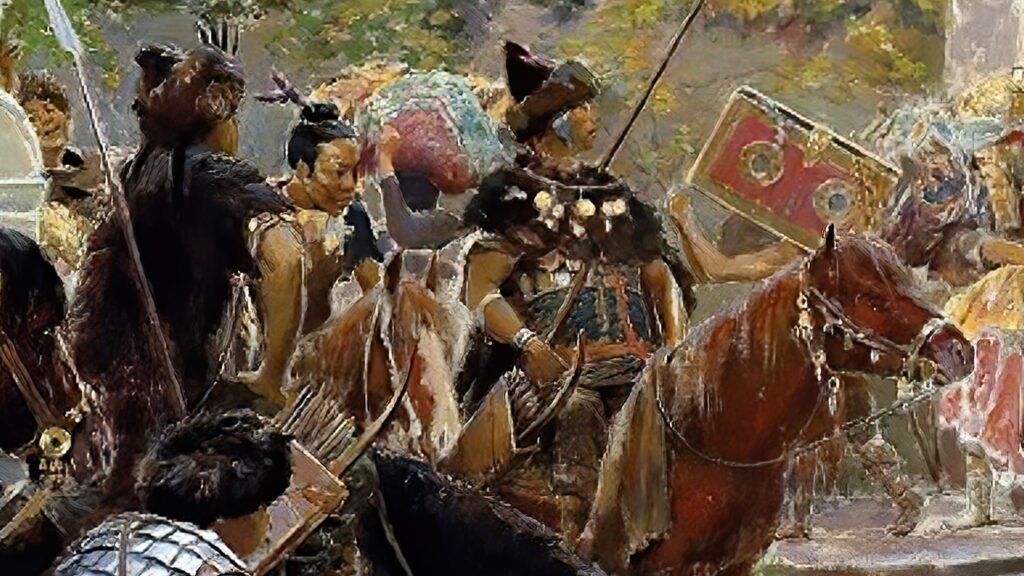
‘Linguistic–ethnic nationalism is the quintessential negative (in Joó’s parlance, “imperialist”) nationalism, a nationalism insensitive to qualitative differences or to more elevated spiritual concepts of the state, such as the unifying “Hungarus consciousness” of the nomadic empire’s supranationalism, which derives from…
‘The most important distinguishing feature of the Hungarian national ethos and Hungarian nationalism, according to Joó, is that the Hungarian nation’s leitmotif of Steppe origin survived the foundation of the Christian state, and even survived the Middle Ages, synthesizing it…
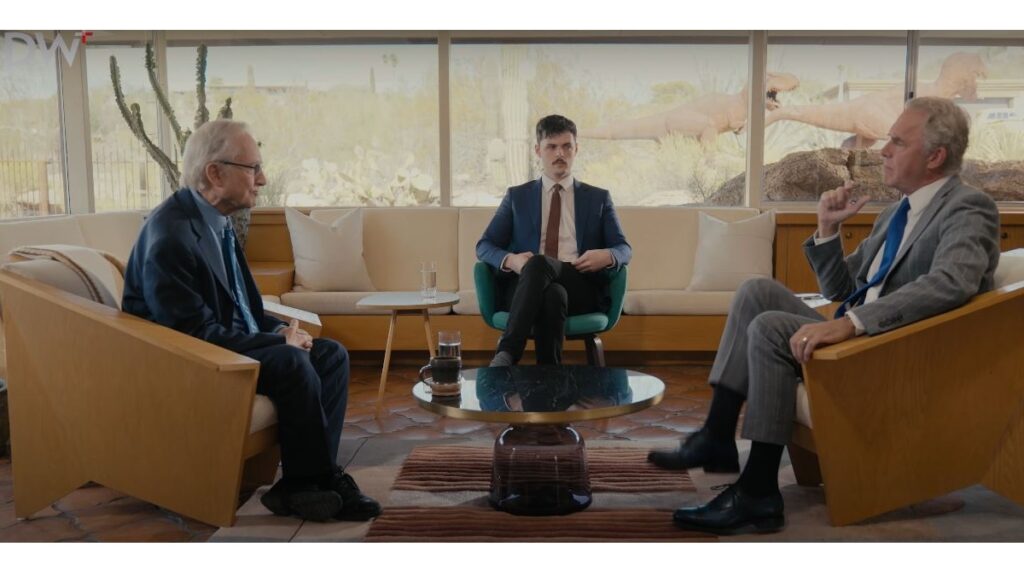
Dr Jordan B Peterson has recently had a public discussion with evolutionary biologist Dr Richard Dawkins, one of the most prominent figures of the popular atheist movement of the early 2000s. The two philosophers touched on subjects such as Jesus…
‘As a committed Protestant, Joó emphasized the primacy of “spirit” over matter in almost all his writings, but he failed to take into account that religion and “spirit” do not always overlap, and religiosity itself simply becomes ineffective if so-called…
‘As modern consumer society has made consumption the root of identity, man has become a prisoner of the constant renewal of consumer demands…Contrary to early capitalist societies, people have completely reduced themselves to the self-as-consumer. The short excitement that accompanies…
‘Coming up with an authoritative definition of conservatism is not an end in itself so much as a sort of ritualistic pursuit, which we perform expecting some change from it along the lines of a deeper understanding of our past,…
‘There can be no question that Thomas Molnar’s thought was often driven by a confrontation with the intensified secularist, materialist, and anti-religious ideological tendencies following the socio-historical and ideological period of the eighteenth century. He sought the roots of modern…
‘Today, the expansion of the state apparatus…continues, but is approaching its culmination. In this spirit, that is, the announcement of the ‘‘fourth industrial revolution’’ and ‘‘digitalization’’, all of which fit into the logic of rationalization and rationalism, the world is…
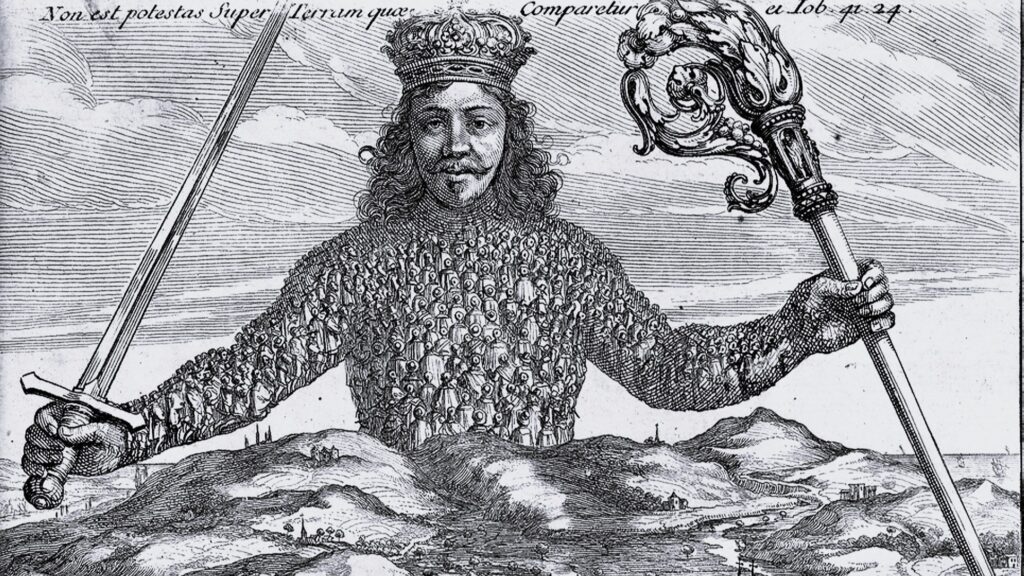
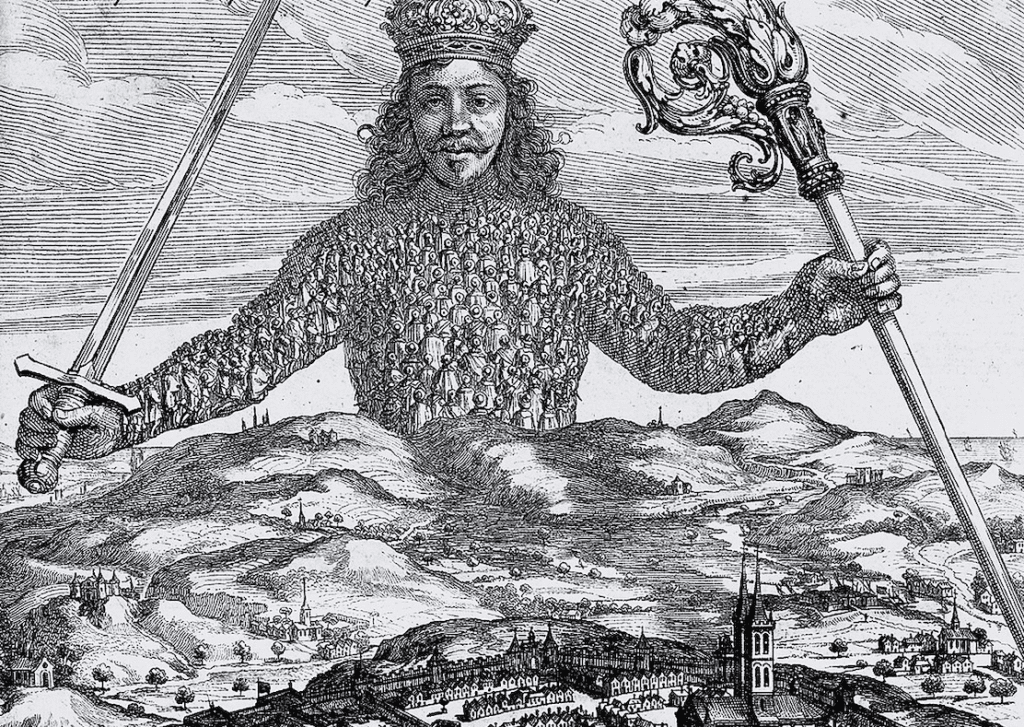
‘What can the modern conservative politician do in the face of such a Leviathan, which he did not create? He has two choices: either he retires and no longer wants to be in politics, or he tries to ride this…
‘If we accept the existence of transcendence as conservatives, we must also accept that everything that is outside the transcendent is sui generis subject to change. Change— and thus clearly also the fact of decline or progress—is made possible by…
‘I believe that the true ontological essence of conservatism is contained in the definition: conservatism is the making present of actuality. In this way, conservatism is bound both to the particularities of specific belonging cultures and to the wider belonging…
‘To maintain social order, legitimate authority needs to be guarded so that popular sovereignty cannot derail in a popularity contest, which we witness today, for example in the American elections. It means that our leaders need to be honest about…
‘Space and time represent the two archetypes of political existence…Space inherently belongs to the polis, the starting point of political ‘residence’ (at least in the European cultural circle), and time belongs to the ship, the instrument of the ‘free movement…
‘It is rarely taken into account that forcing a general expansion of education also means levelling. And if something is extended in a general and obligatory way, then it will be quantitative rather than qualitative. If we imagine all of…
‘Just as liberalism did not succeed in transforming people after socialism, neither did the competing anti-liberal, post-Christian, nihilistic trends. The solution is certainly not political or movement-based: those had already failed by the middle of the twentieth century.’…
‘Christian realism is not unprincipled power politics or mere pragmatism, but the intelligent use of power and politics for the sake of representing Christian ideas and the common good (bonum commune), within the bounds of worldly political constraints.’…
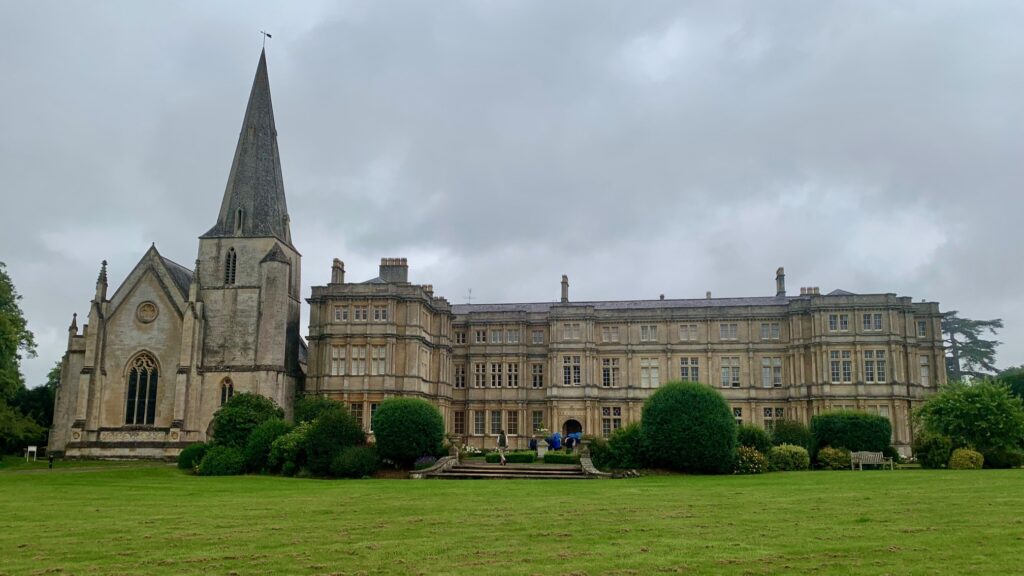
‘The programme took place in the idyllic settings of the Royal Agricultural University in the Cotswolds and Sundey Hill Farm, where Sir Roger lived and worked for three decades. The week’s agenda was filled with intellectually stimulating lectures, vibrant discussions,…
‘Europe finds itself at a critical situation, faced with a fundamental choice between unity in progressivism or sovereignty in diversity…Central to this decision is the recognition of Europe’s intrinsic diversity, rooted in centuries of history, cultural exchange, and shared heritage….
‘It might not be as explicitly visible as substance abuse, but below the surface, we are all struggling with our own imperfection and “sinfulness”. We all let our subjective anxiety overwhelm us and tempt us into a destructive state. Kierkegaard…
‘In today’s culture, one has to explain how the modern existential paradigm does not hold the truth to sustain a prosperous life or society. With radical and individualistic generations being raised, nothing is more effective than to point out how…
‘The doubtful mind has been persuasive and embedded in modern Western culture. Therefore, it is important to understand the underlying psychological falsehood. Radical doubt only works as an abstract confusion which paralyses people into a void of distress. Additionally, doubt…
‘But national consciousness is precisely the origin of modern democracy and is still crucial for organizing democratic solidarity. Of course, nationalism can lead to a dangerous chauvinism which makes people believe that their nation has the right to bully others,…
‘A successful republic, according to Machiavelli, is characterized by laws that are lived by rather than frequently amended. While no system of governance can achieve absolute perfection, a stable republic can achieve a functional balance. For him Rome serves as…
‘Before the term “liberal” became ideological, it referred to much more general, non-political characteristics: open-mindedness, generosity, and the like…Liberalism, however, marked the triumphant beginnings of modernity, which aimed to create a political morality called “the conception of rational choice as…
‘According to the main line of progressivists, the struggles of history lead to a just or more just society, just as science eventually overcomes “superstition”. Ironically, today’s supporters of the ideology of progress are often those post-Christian materialists who believe…
‘The lessons from Molnar’s book about Bernanos remain fresh today. The “fascist temptation” has not disappeared, but only appears in new forms…Bernanos’s prophecy is interesting because there are still today, and probably always will be, movements that call for a…
‘The question I am left with about Hazony’s rediscovered conservatism is whether it is a conservatism that is, or could be, rediscovered, or is it a conservatism that has never existed. And, even if it did exist at one time,…
‘The flaw in the progressive hyper focus on moral rights is that it removes the ability of reality testing outside the subjective experience. Therefore, it feeds our narcissistic tendencies, which in turn enhances destructive behaviour, anxiety, depression, and above all,…
‘In the modern, global-technological civilization based on the parallel structures of technical rationality, the idea of freedom still arises as an “abstract freedom” that is allegedly “the same for everyone”. But, regarding recent facts and conditions, this concept of freedom…
‘The phenomenon of the conservative revolution was partly a consequence of the collapse of the German state (formed in the 19th century by Bismarckian ‘state-building) after the First World War, and was born out of its internal and external crisis,…
‘Various machines also existed before modernity: the builders of the Gothic cathedrals of the Middle Ages also had considerable engineering and pragmatic knowledge, so it was not that they lacked the necessary knowledge, but above all they lacked the formulation…
‘A radical paradigm shift is required in which mental suffering is understood not in isolation, but in relation to consuming and depriving human existence of its roots: family, community, and a transcendental orientation. Only then can Hungarian society, as well…
‘In today’s democracy, authority is in crisis because real authority cannot follow from mere quantity. Quantity is always relative, and the thing what is ‘never identical to itself’ cannot awaken the intuition of true respect, true authority, and true supremacy….
‘Schmitt’s thought becomes particularly relevant in understanding how governments define the parameters of inclusion and exclusion in their responses to the pandemic. Schmitt’s theories provide a realistic framework for analysing such complex political issues, and understanding such a critical perspective…
Spengler’s work has not lost any relevance over the century that has passed since it was released, but rather has become increasingly significant: it is now one of the inescapable foundations of the philosophy of history. Many of the predictions…
‘For material, political, and geopolitical reasons, democracies trend towards long-duration, remote, low-exposure, naval, air, and space warfare. An absent-minded reading might leave a reader with a sense of dissonance between democratic tendencies and democratic victories in two world wars. In…
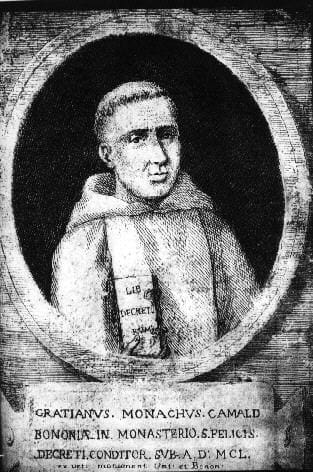
The notion of law reached new heights in the thirteenth century with Aquinas. Building upon the jurisprudence of the father of canon law, Gratian, who synthesized and harmonized the works of Roman jurists and the theological traditions, the Angelic Doctor…
In Scruton’s philosophy…the social practice of legislation and jurisdiction could not be realized outside the national framework, because—regardless to their origins—the interpretation and the enforcement of the set of legal rules and moral duties, even human rights, are bound to…
‘Before the corrosive spirit of purely rational analysis without synthesis became widespread, societies were conservative because they perceived the non-variable essence behind phenomena not only through their most eminent intellectuals but also collectively. The ‘‘men of the spirit’’ in each…
‘Instead of alienating modern man and calling him weak, conservatives should put forward mankind’s greatest treasure: a transcendental focus towards meaning. Only then can this time of polarisation and erosion of mental resilience, social cohesion and institutions be turned into…
Paradoxically, it seems that democracy can only sustain itself and protect itself from collapse, (tyranny and chaos) precisely by what is not democratic in it. It seems that it is always easier to justify democracy with a quasi-mystical hypothesis than…
One simply cannot put something as complexly different as the Chinese intellectual field onto either the American left–right axis or the West-European ideological taxonomy. Ultimately, the Chinese field is a different world, albeit one that bears affinities with, and shows…
Nanos gigantum humeris insidentes, or dwarfs standing on the shoulders of giants, is a phrase first used by the twelfth-century French philosopher Bernard de Chartres. It has been chosen as the motto of the Barna Horváth Hungary Law and Liberty…
While the supposed freedom of a materialistic culture will tend to undermine any sense of the sacred, we can be aware of the false idols and choose to tend to our souls. Scruton, indeed, left us a final work on…
The inherent dilemma regarding the rules of engagement in a just war is that they tend to become either vague or restrictive when military operations fail to achieve victory or a ceasefire leading to peace….
Political philosophy that is clearly separated from legal philosophy could not really take root in Hungary either in the Renaissance or in the 18th–19th centuries. Outstanding experiments such as certain writings of Count István Széchenyi or Aurél Dessewffy, the ‘Ruling…
The most characteristic phenomenon of modern industrial capitalism in Chesterton’s assessment is the development and creation of the so-called ‘trusts,’ economic monopolies that deliberately strangle small businesses, while not infrequently operating as a criminal consortium, intertwined with political and state…
‘The duality of God and man is the most fundamental reality of existence: a reality which can structure and constitute all relations of human beings. This principal duality is the source of everything: epistemology, ontology, moral philosophy, politics, and—of course,…
‘What is less known is that Tsiolkovsky essentially wrote his groundbreaking contributions to rocket theory as supplementary notes to his philosophy of space exploration, which was the primary focus of his attention and consumed most of his efforts. What is…
Pierre Teilhard de Chardin is without a doubt one of the most prominent theologians of the 20th century, whose intellectual contributions to both science and religion gained recognition and respect from both the clergy and the scientific community. His oeuvre…
One of the recurring topics of Agustine of Hippo’s City of God, a foundational work of Western philosophy, is his critique of Roman religion as having no moral teachings to offer….
‘When Marx explained the philosophical foundations of dialectical materialism, he first of all referred to the “development of the natural sciences”, just as the representatives of today’s New Atheist movements like to claim that “science has surpassed God” when explaining…
‘The term “liberal” was undoubtedly originally associated with the aristocratic spirit of freedom and generosity (in Latin: liberalitas), which, recognizing a natural hierarchy among individual beings, finds diversity welcome and does not desire to make things equal in all circumstances….
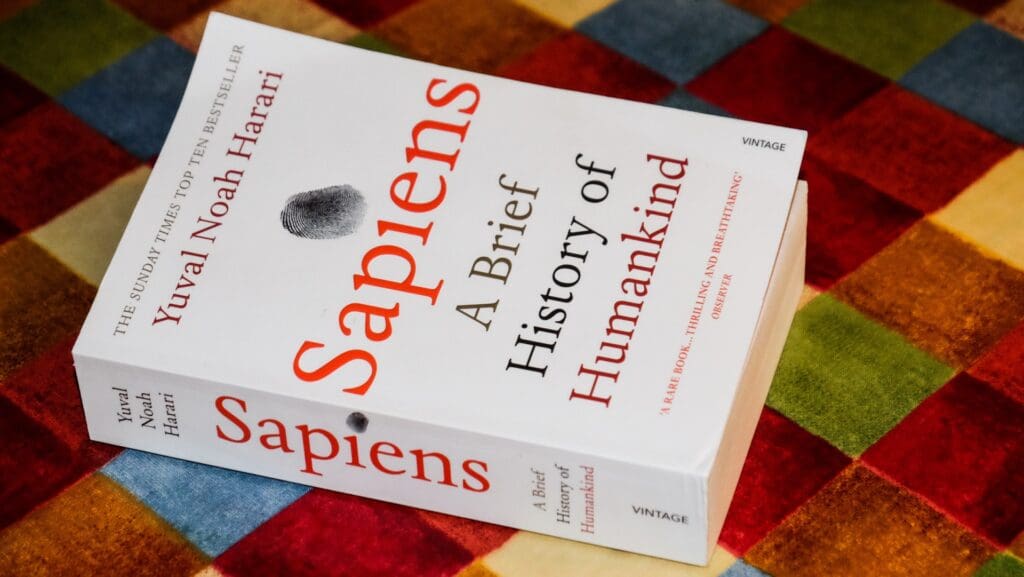
‘Transhumanism—at least in the form in which it is represented and explained by Harari—stands, above all, on the ground of anti-religion. The mechanical man, who becomes immortal, as the meaning and purpose of history, is above all the opposite of…
Hamvas’ focus on metaphysical questions in the field of philosophy did not simply stem from his belief in God or his religious predisposition, but rather from this critical attitude towards modern natural science, from a ‘scepticism against scepticism.’…
It takes courage to see which situations and expectations the conservative should reject. And it takes courage to say ‘no’. The dilemma of when courage is appropriate and when moderation is needed is not logically insolvable. In the words of…
Oakshott’s individualism differed from the individualism of liberalism, which rejects traditions. Oakeshott assumed that individuality can only be created in some context, and that freedom can only be enjoyed in order. It is not the acceptance of authority, but the…
‘If a society is exhausted in immanence, if people are not aware of the finitude of their own life, knowledge, and power, and if every goal of the person, the state, and politics is directed towards material interests, then the…
Hyper-democracy is already here, it will grow stronger, and we are only starting to understand its profound effects. Some of them will be detrimental, others will open up new opportunities. This might appear overwhelming and unprecedented to some, but in…
The lack of humility, modesty, the lack of deference to one’s superiors, the lack of discipline and respect are the main causes of most of the political and sociological problems of modernity. After all, according to the blind believers of…
Perhaps the most exciting aspect of the work is that its author is brave enough to challenge completely the established thinking and vision that takes historical progress and the associated rise of liberalism for granted….
The first part of this article concerned itself with Burke’s general notions related to democracy. This part explores how he addressed the topic in his pamphlet on the French Revolution….
‘With in vitro fertilisation, conception takes place outside the mother’s body, rendering the natural conjugal act between husband and wife in itself as alien to the institution of the family. Man and woman no longer come together as one, but…
In contemporary Catholic social teaching, like Slachta’s reasoning, women are essentially other than men, and this otherness is articulated in the papal encyclicals in relation to women’s role in the family. In contrast, the Catholic nun’s view of the female…
‘The disappearance of the aesthetical representation of power from politics parallels the egalitarian rhetoric of the rationalists. The representatives of power often emphasise today the ‘non-existence of differences’ with their own clothing and behaviour, although anyone who is not completely…
Standing on the ground of inexorable social progress, Prohászka views social transformation positively, and even despite his harsh criticism of socialism, he acknowledges its necessity. After all, social democracy serves to achieve social progress that ‘excludes the phraseology of delusive…
As Kecskés frequently highlights, the source and the end for human beings is God. This is the basis on which every Christian social theory should rest….
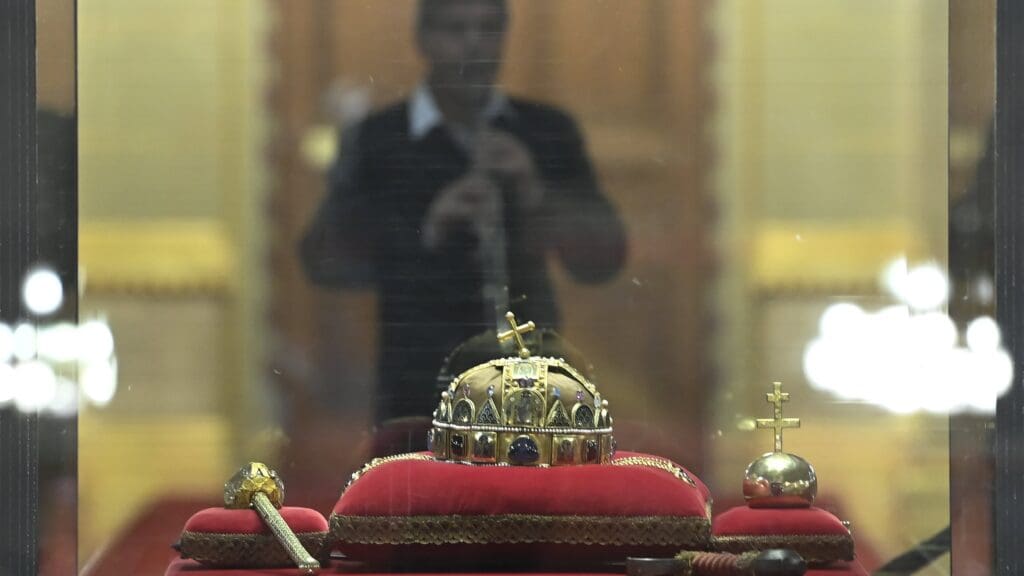
According to the most fundamental concept of the Holy Crown doctrine, everyone who has political rights in the territory of the country is a member of the crown, a part of its ‘body’….
Given the resurgence of the concept of central planning, it is vital to recall that even 20th century scholars recognised the profound flaws inherent in such a techno-optimistic approach. One of the intellectuals opposing this mindset was Michael Polanyi, a…
Although we clearly cannot consider László Németh a conservative thinker in the ‘classical’ sense, we can still regard him as an interesting writer. He is worthy of our attention especially with regard to his critique of technocracy. In fact, he…
Human inventions such as contraception that ‘simplified the process’ of accessing sexual pleasures, had the ultimate side effect of devaluing romantic love, as what used to make it precious was the difficulty of overcoming the cultural and societal barriers of…
There is a myth, to be dispelled, that the Romans were always cruel conquerors. In truth, those who lived under the rule of the Caesars had plenty autonomy, be it in the public or private sector of society. It was…
Innovation is both a fundamental human activity, and a fundamentally human activity. It is fundamental, insofar as we are compelled by the need to innovate—a need that expresses itself in various ways….
The more cognition advances, the more challenging it is to create a unified approach to our knowledge. This is the trap of transparency, our crystal palace is therefore a dangerous structure. Information society and the endlessly expanding scientific discourse tendentially…
A new populism is appearing, based on real participatory federalism oriented towards tradition and community, with the Nomos being grounded in the ethnic divisions of states and regions….
Hungarian policymakers not only consciously reject the idea that history did and can end, but also do not pretend that the final chapter of Ukraine’s or Europe’s war-torn history can be ‘closed’ once and for all….
This article will present the reader with a basic understanding of the tragic but triumphant life of Whittaker Chambers, the man whose dramatic, twelve-word encounter with God and subsequent heroic exploits became the inspiration for a new generation of conservatives,…
As long as people are conditioned to become consumers by advertising applied on an industrial scale, and as long as material comfort and interest are above all else, the environmental crisis will not be solved satisfactorily and especially not with…
‘Bangha considered “social redistribution and governmental intervention to be appropriate tools”. These tools, according to Bangha, create the possibility to eliminate the imbalances that—as he puts it—are caused by mega-wealth concentrated in a few hands. In turn, these measures are…
As philosophical materialism and the resulting transhumanism are atheistic systems of thought, it is extremely important for Harari—as it is for Dawkins—to deny the idea of God. Just as Richard Dawkins replaces a transcendent creator with the theory of evolution,…
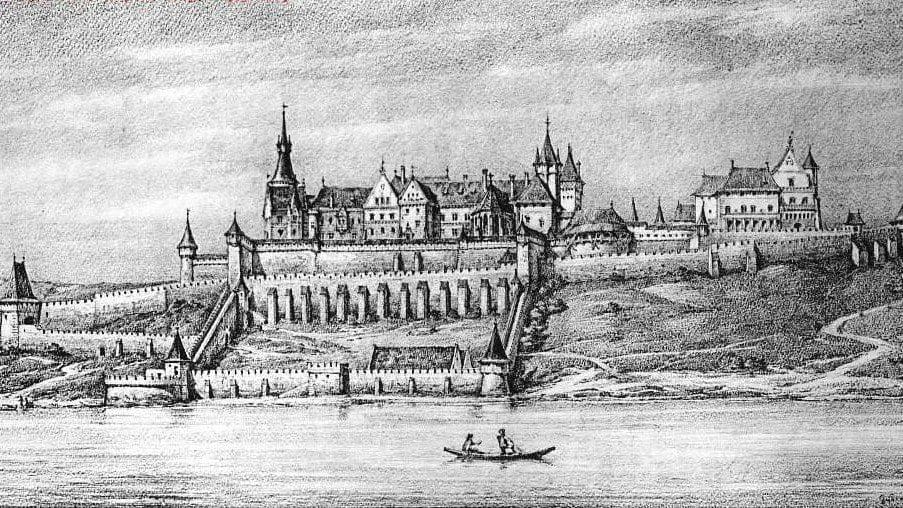
The seeds of Hungarian humanism were sown by Matthias Corvinus, which helped the Jagiellonian kings pave the way to embedding humanism into Hungarian culture….
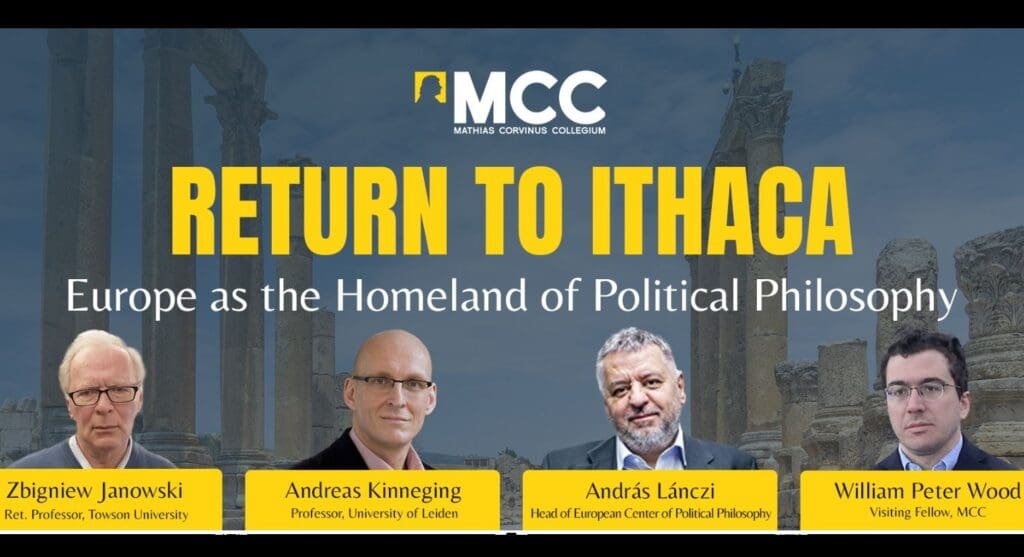
The distinguished speakers all stressed how important they believe it is to have the global centre of political philosophy moved from the US to Europe, where it originates from….
Physiocracy played only an episodic role in modern economic political thinking and, therefore, so did the perspective that linked the economy’s performance and ability to produce value to nature….
Europe’s contemporary society, the current system and operation of the European Union, its political, social and more deeper tensions—affecting the whole of human existence—all prove that the still popular phrase ‘progress’ is losing its catchword character just as more and…
Conservatives are those who uphold tradition, the nation, and the values of the Bible. If we take care to uphold those principles consistently, it will become increasingly difficult, and eventually impossible, for those who advocate other principles, to present themselves…
Today our society, the Roman Church, and other ecclesiastical communities are experiencing an epidemic of confusion and moral and doctrinal disorientation, which is threatening the common good….
This paper should suffice to invite the reader on a theoretical pathfinding journey, throwing light on why some forms of criticism of modernity have faced difficulties….
Hobbes refuted traditional higher law tenets and motivated people to accept the established laws and customs of their nations, even if they appear oppressive, for it is the only way peace and security can be obtained in society. The state…
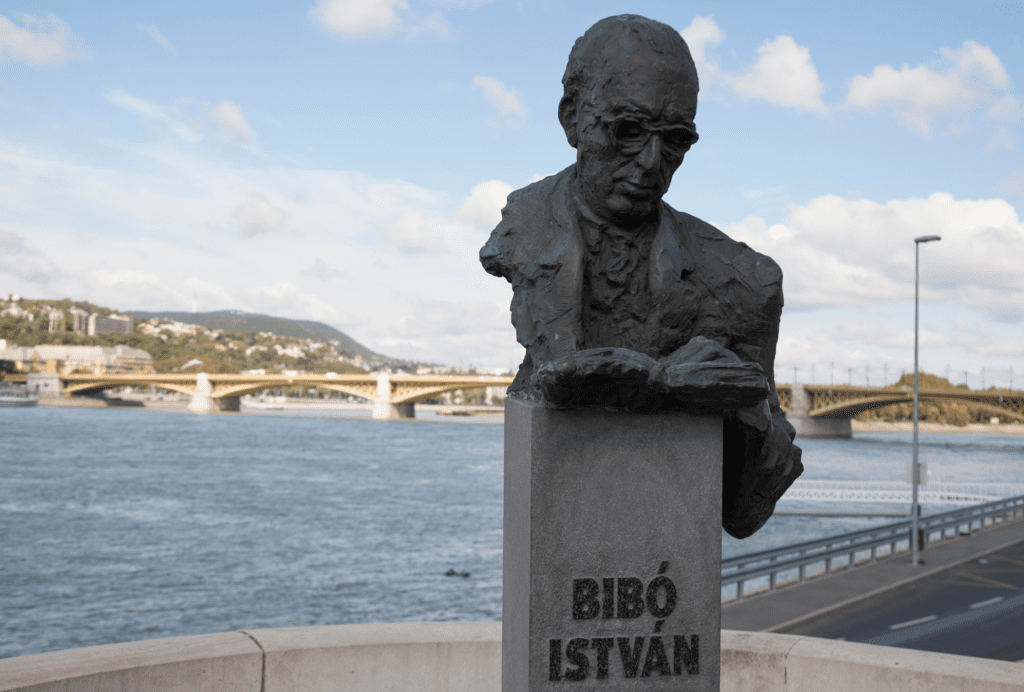
Some 30 years ago, István Bibó was looked upon as one of the most influential Hungarian political scientists. Unfortunately, he has been largely forgotten since—so perhaps it is time to rediscover him….
Creativity continues to be a central component of politics, but it is less frequently manifested in the novel application of experience than in the methodical implementation of a procedural rule in practice….
There is growing concern that the overuse of the term ‘genocide’ may devalue it. Clearly defining what genocide means is crucial to prevent it from being used as a validation of every kind of victimhood….
One should shed tears when the true essence of humanism, which parallels our Christian faith, is not only misplaced, but altogether exploited for non-humanist purposes….
The recent assassination of Alexander Dugin’s daughter has seen a consistent mantra from the Western media; Dugin described as an ‘ideologue’. It is one of those phrases which epitomize the “corruption” of language, for—as language develops—certain terms become sacrosanct, unexamined,…
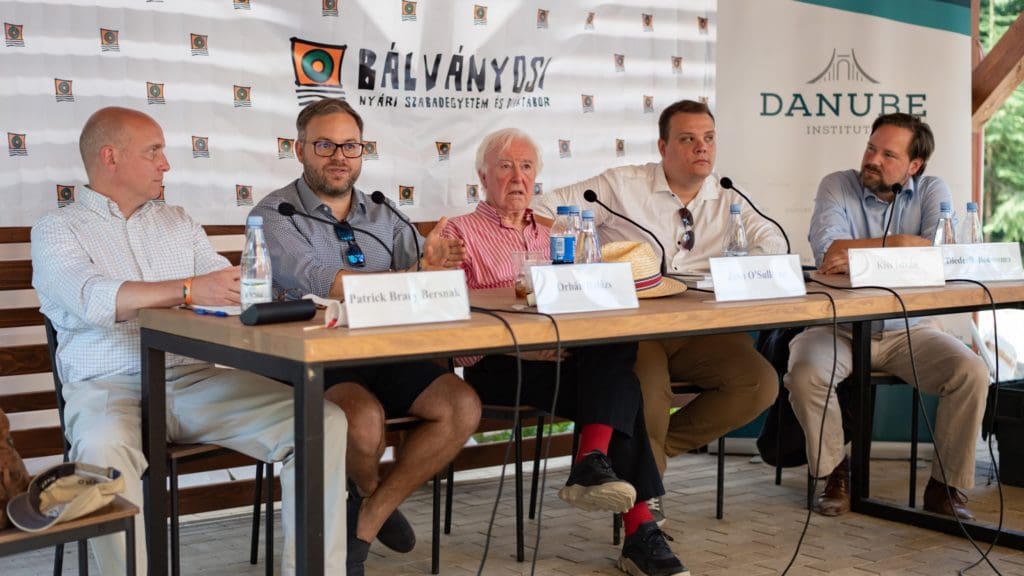
A recent panel of remarkable political thinkers from across the West attempted to define the essence of conservatism, along with its current direction and its possible future pathways. A report from Tusványos 2022….
Salutati’s humanism, focused on the continuity or discontinuity between ethics and politics became the civic turning point of the humanistic spiritual and philosophical reinterpretation of Cicero’s political tenets that would later culminate with the notable Niccolò Machiavelli….
What classifies Petrarch as a humanist was his belief that secular literature and philosophy could enlighten all men and bring about an end to, what Flavio Biondi called, the darker ages of distrusting the critical thinking and non-religious wisdom of…
In the wake of a global pandemic, Western democracies have become hugely indebted, weak, self-loathing riven by incessant migration and beset by an identity crisis. What went wrong?…
The rise of political and spiritual disunity in early modern Europe coincides with what Patočka calls the desire to “project […] the division of Europe upon a division of the world” — in a word, colonialism….
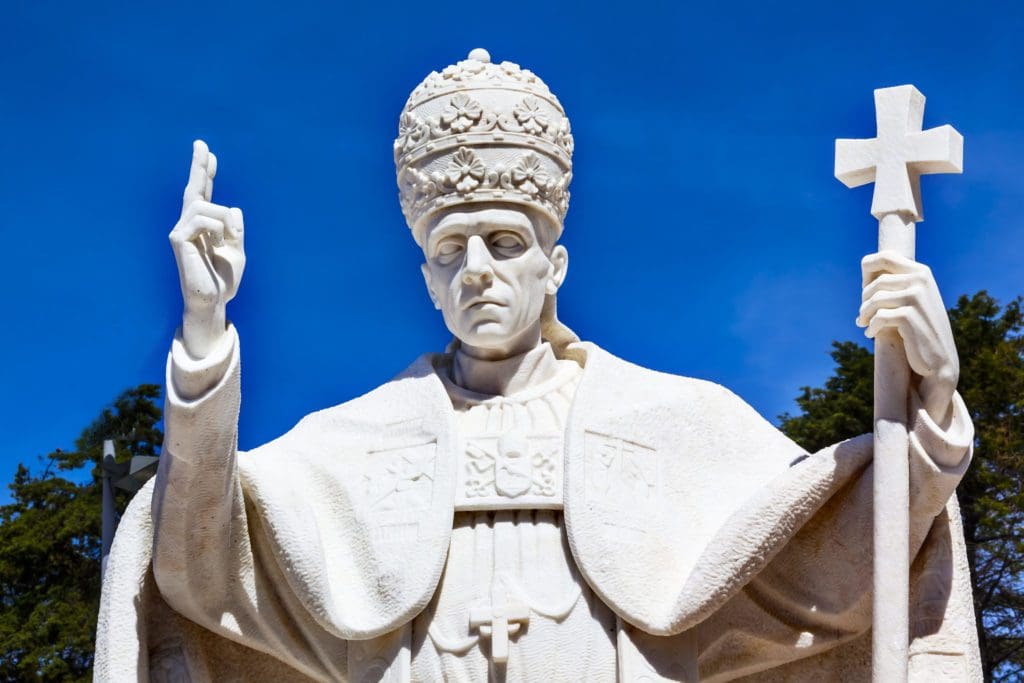
In the twelfth and final part of the Theologians on Modern Politics series, we would like to highlight the details of Pope Pius XII’s political thinking….
It is our belief that the Western liberal elite’s irrational hatred of Hungary’s political culture is driven by a deeply entrenched sense of insecurity regarding its own legitimacy….
European society has forged a culture that, in a manner previously unknown to humanity, excludes God, the divine logos from the public conscience. He is denied altogether, or judged to be irrelevant to public life since His existence cannot be…
The teachings of Pope Benedict XVI are an appeal to the individual to ponder on God’s unwritten law inscribed in his or her heart so that he or she may better contribute to the common good of society….
Of course, violations of the rule of law must not lead to corruption or abuse of power in the member states. However, a schematic “transfer” of the institutions that serve the rule of law to the EU level could particularly…
The rule of law debates could have a drastic effect on the future of the European Union. The systematic transfer of institutions serving justice and enforcing the rule of law to the European level may endanger democracy and in particular…
Christian political theology rejects the optimistic Enlightenment belief in progress, for it seeks to remember those who have fallen out of collective memory, itself defined in the modern age by the myth of progress. Remembrance is one of the most…
While realism is defined explicitly, Christianity is not. Nevertheless, several crutches could lead us to understand Bennett’s theological perspective. He helps us in this effort when he plainly rejects ‘post-Kantian idealism that represents the pride of autonomous reason’….
Gratian synthesised both Roman law and the theological traditions in such a manner that compelled future jurists to rely more on the Commandments than human law….
‘Today, European law, which had previously been on an equal footing, seems to be seeking hegemony over the legal systems of the member states, no longer merely to harmonize them, but to incorporate them in a furtive federalism.’…
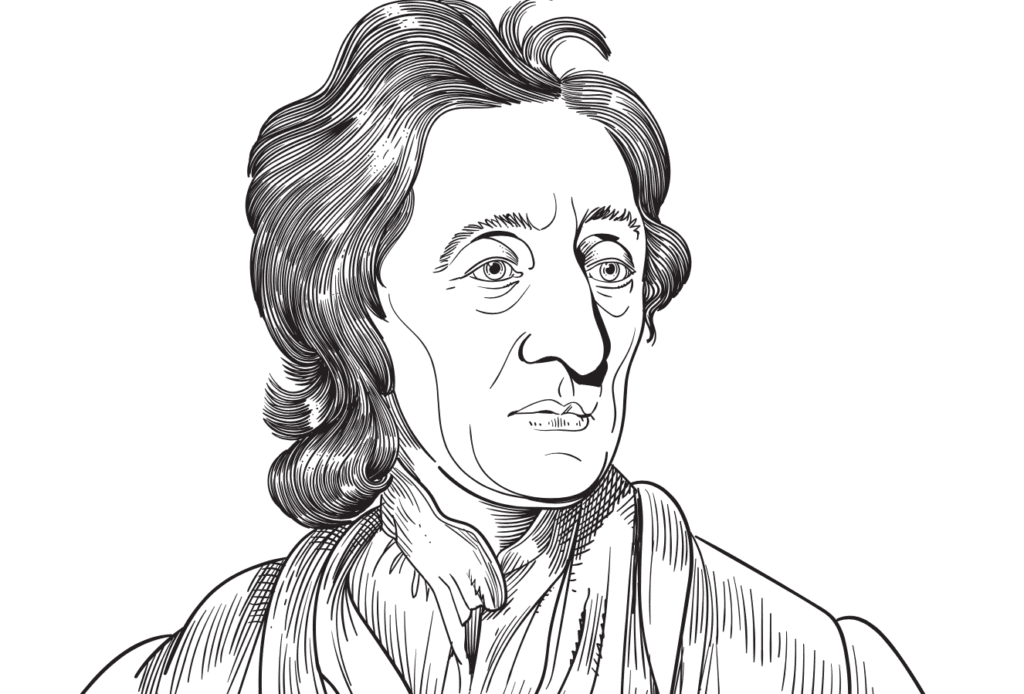
John Locke’s philosophy of the natural law did provide the means for people in liberal democracies to overcome all types of discrimination and segregation, simultaneously protecting our civil liberties….
There is very little sense of an objective, rational order in Islam because Allah’s laws do not have to conform themselves to any natural and rational order….
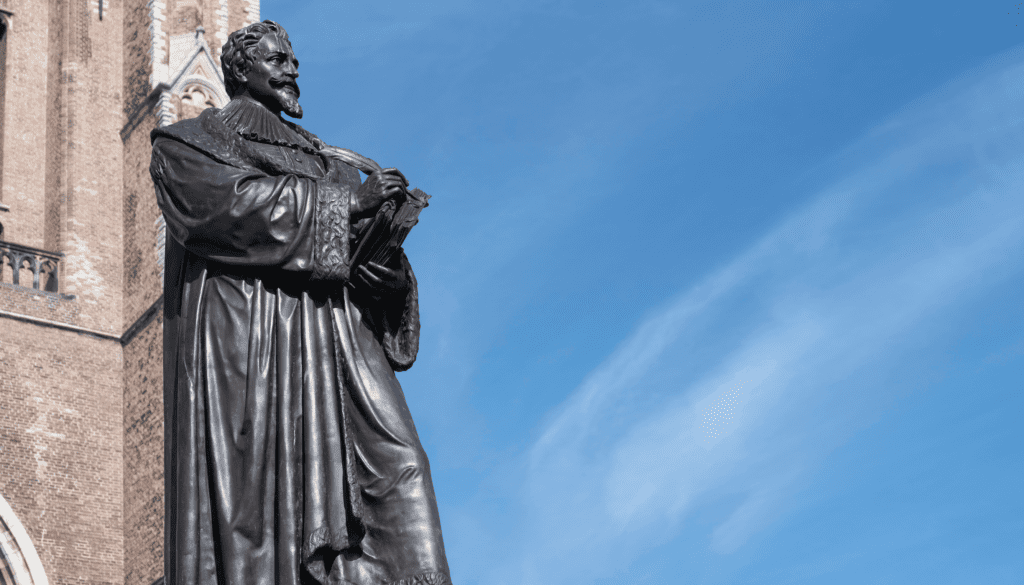
While Grotius had the best of intentions, he inadvertently paved the way for the atheistic philosophy of the Enlightenment and today’s effective altruism that has reduced the human person to a mere statistic….
Law professor James Allan claims that although written constitutions are very popular around the world, they may not deliver what they promise to citizens….
Paradoxically, the present-day misconstrued idea of secular individualism, which was fully developed during the Enlightenment, has its roots in early Christianity….
The guiding thread of Hungarian conservative thinking has always been to represent the Hungarian national interest, and thus the preservation of the country’s sovereignty and freedom—this is understood to supersede any theoretical concepts….
In this article, we would like to highlight a particular detail of Böckenförde’s thinking—specifically his conception of the relationship between Catholics and the state….
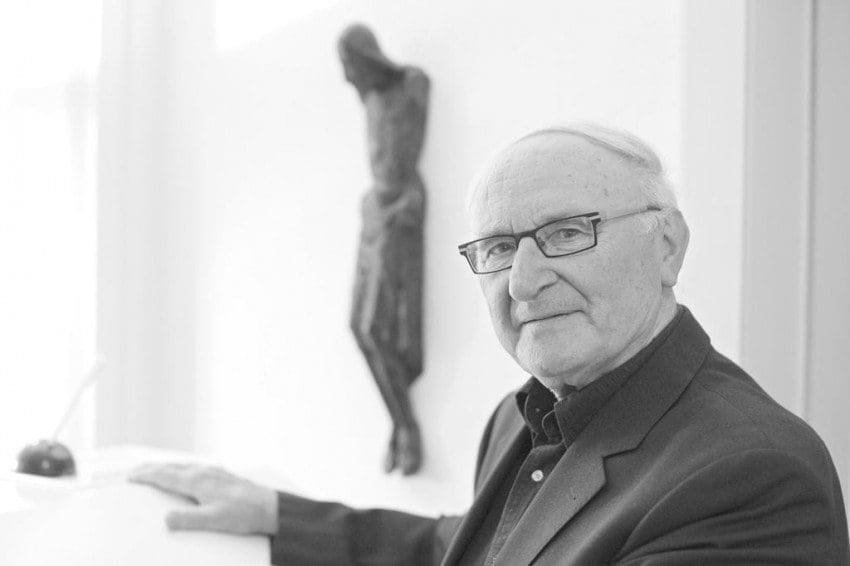
In the article we briefly introduce the ‘new political theology’ of Johann Baptist Metz (1928-2019), a contemporary of Ratzinger’s and a defining figure in 20th-century German theology….
Does the model of the ‘secular’ state—that is, a state devoid of any religious foundations, as presumed by the narrative of separation—exist at all, or is only a myth of the modern era?…
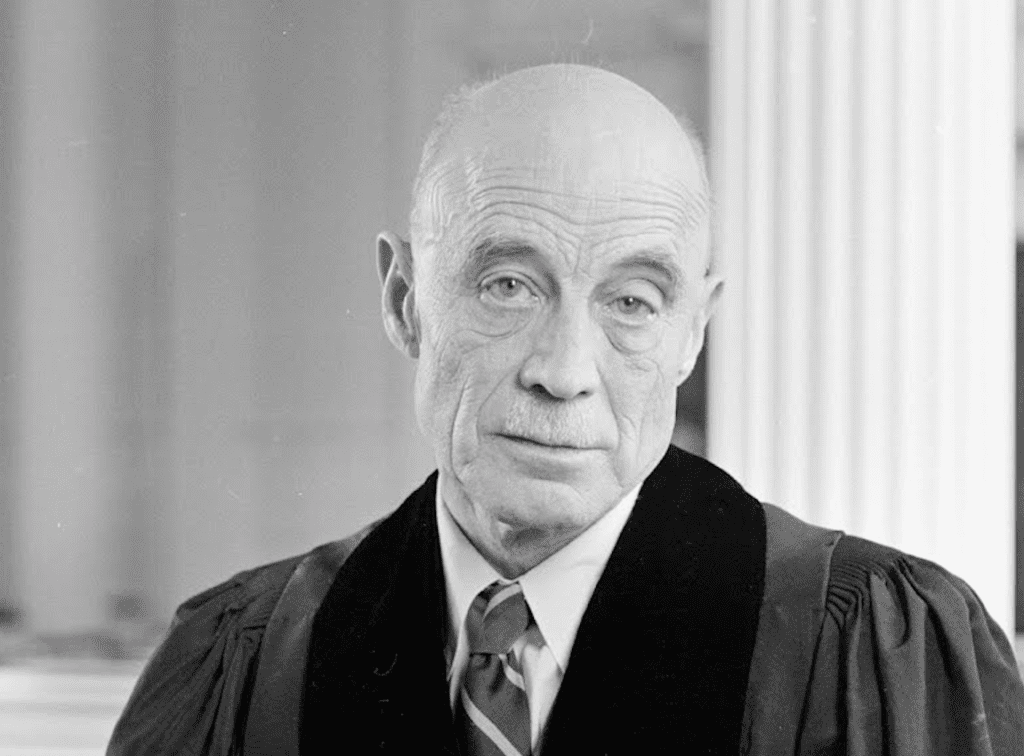
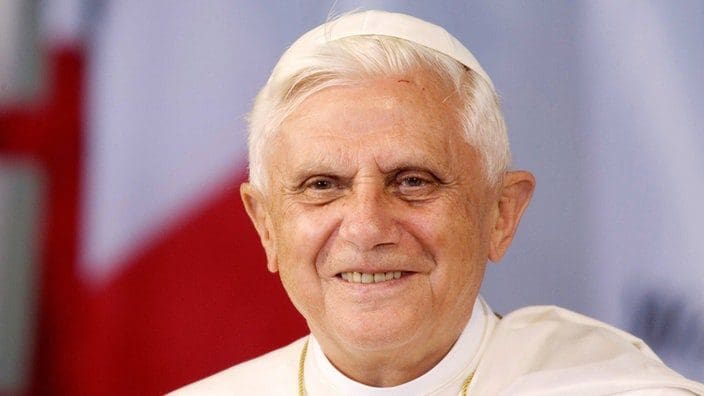
We present a brief introduction to the political thinking of an eminent contemporary Catholic theologian, Joseph Ratzinger (1927–), the subsequent Pope Benedict XVI….
This article examines a nowadays less quoted part of Reinhold Niebuhr’s thought, which is also related to his emphasis on the sinfulness of human nature, the idea of the ‘easy conscience of man’….
Being politically modern means the hope that people are able to take their own life into their hands and be their own masters, and that the human condition can be completely understood and controlled….