





As Hungary heads towards a decisive election in April, the campaign has been engulfed by an intensifying information war. Over the weekend, Viktor Orbán and his government were accused of coordinating a fake Russian-backed assassination plot, injecting ‘truth serum’ into Ukrainian detainees, and leaking EU secrets to Moscow. All claims lack verifiable evidence today.

Four ambulances belonging to a Jewish charity were set on fire in north London, with police treating the incident as an antisemitic hate crime. No injuries were reported, but authorities are searching for suspects.
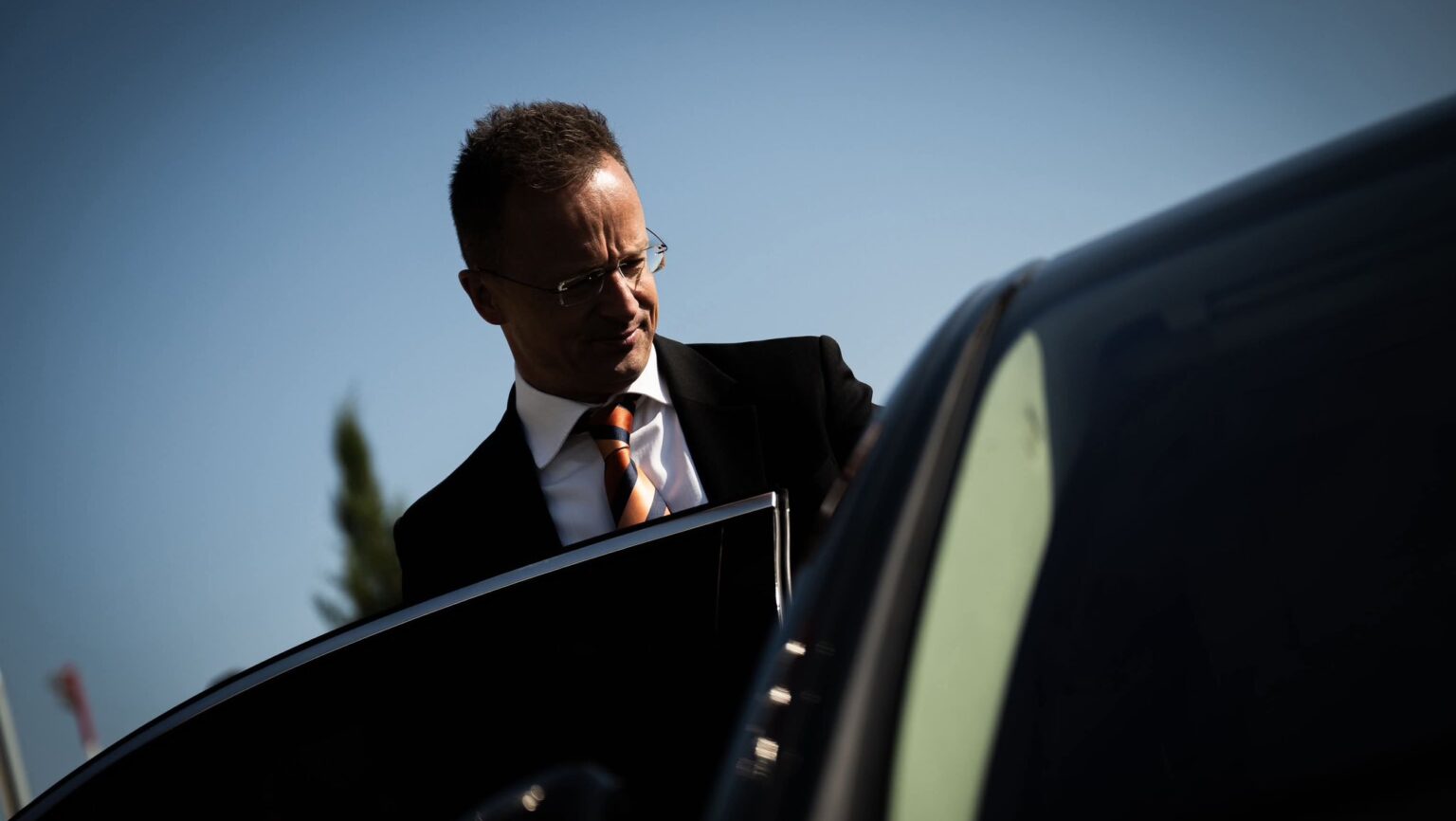
In a recently leaked audio recording, Hungarian journalist Szabolcs Panyi—a key figure in the ‘Russian interference’ narrative—appears to describe cooperation with a foreign intelligence service, including sharing Hungarian Minister of Foreign Affairs and Trade Péter Szijjártó’s phone number and enabling potential surveillance. Viktor Orbán has ordered an immediate investigation into the claims.

‘It has now been three weeks since the U.S.–Israeli conflict with Iran commenced, aiming ultimately to dismantle its theocratic regime. Although it is undeniable that Iran has incurred significant losses, including the assassination of its Supreme Leader and other high-ranking officials, its illegitimate government seems to remain stable.’

Alice Weidel, Santiago Abascal, and Javier Milei closed CPAC Hungary with fiery speeches focused on sovereignty, anti-globalism, and Europe’s future, highlighting Hungary as a ‘beacon of hope’ and expressing clear support for Viktor Orbán ahead of the upcoming elections.
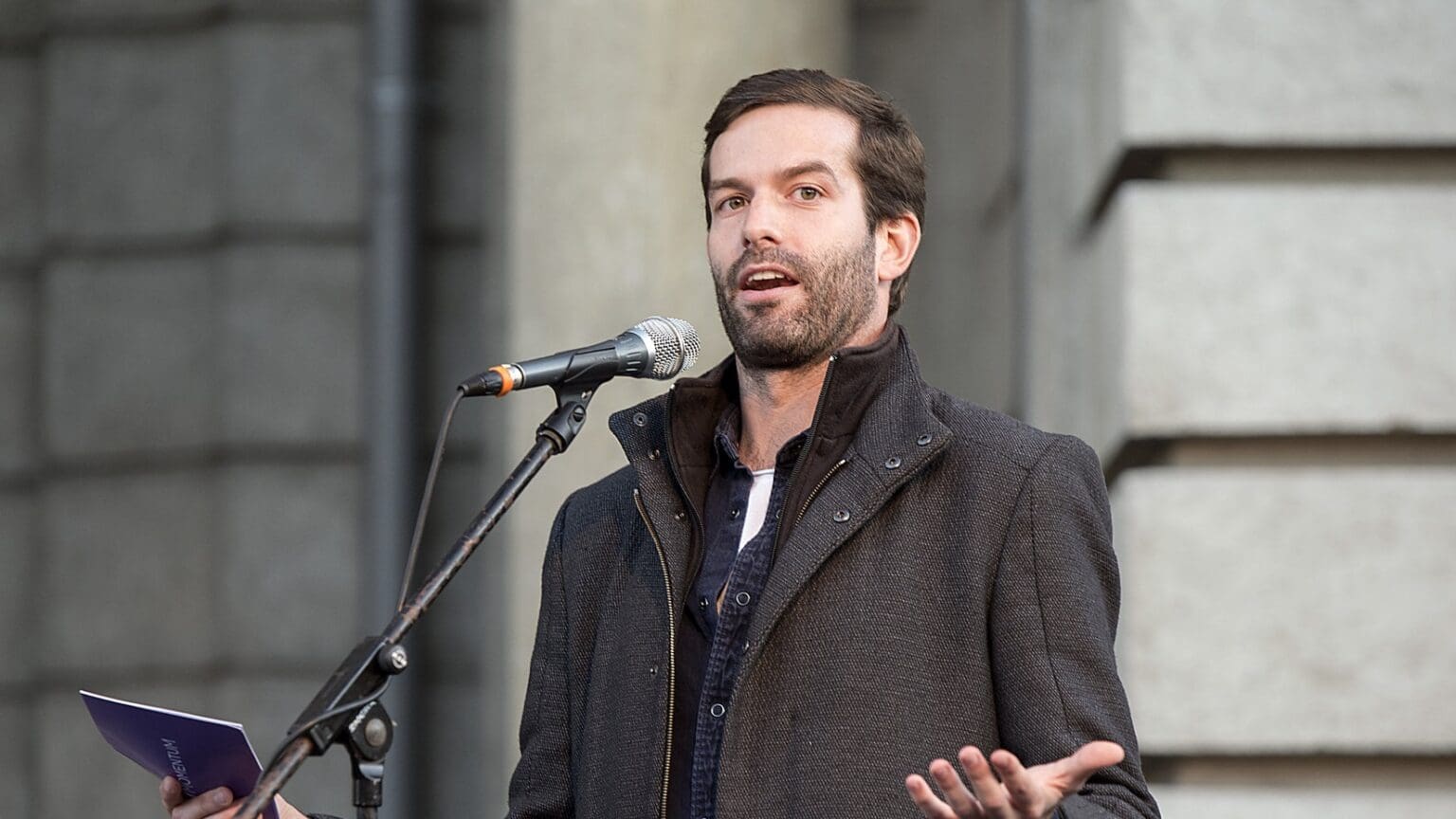
A report has alleged the existence of a coordinated online network promoting pro-Ukraine narratives in Hungary, involving opposition-linked figures and social media activity ahead of the elections.

CPAC Hungary 2026 in Budapest, Hungary, featured keynote addresses by Prime Ministers Viktor Orbán of Hungary and Irakli Kobakhidze of Georgia. US President Donald Trump sent an exclusive video message to the event.

Political Director to the Prime Minister Balázs Orbán said Hungary faces political pressure from both Brussels and Kyiv ahead of the elections, while outlining plans to strengthen regional cooperation if the government retains power.

‘America is our only hope, only political counterweight to the EU,’ Eva Vlaardingerbroek stressed during a discussion with Dave Rubin in Budapest on Friday night. The full-house event, organized by the Danube Institute, focused on the civilizational challenges the West is facing, from migration and free speech to the wars in Ukraine and Iran.

German President Frank-Walter Steinmeier has sparked backlash after declaring Ramadan a ‘festival native to Germany’, a remark reflecting the growing detachment of Western European elites from their own cultural foundations. The statement comes at a time when the German public is once again raging over brutal crimes committed by perpetrators with an immigration background.

Due to a tragic terror attack in Czechia, Prime Minister Andrej Babiš had to return to the country and will not be able to take part in CPAC Hungary 2026 tomorrow as originally planned, Center for Fundamental Rights Director General Miklós Szánthó revealed at a press conference. However, President Javier Milei of Argentina will be among the distinguished speakers, he also announced.
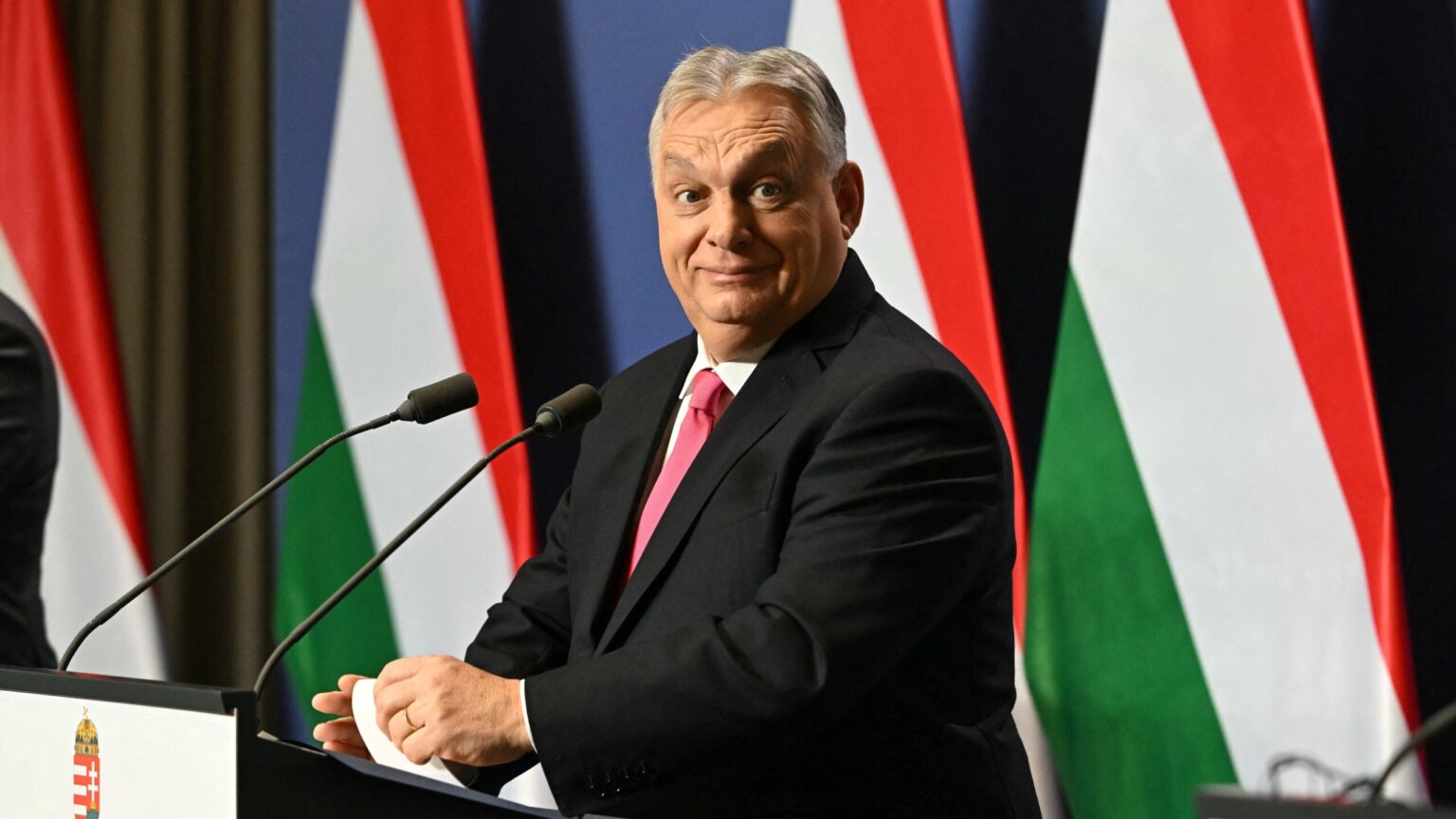
EU leaders increasingly see Viktor Orbán’s re-election as likely, POLITICO Brussels reports, contradicting opposition narratives built on favourable polling. Citing an EU official present at yesterday’s summit, the outlet reported that many leaders expect Orbán would be easier to convince to lift his veto on the €90 billion EU loan once re-elected—which they expect to happen.

Can free markets still save Western civilization? This was the central question at the Free Market Road Show in Budapest, where leading economists and policymakers warned that Europe’s economic stagnation is the result of deliberate policy choices—high taxation, overregulation, and flawed energy strategies—that are undermining growth and competitiveness.

Prime Minister Viktor Orbán said Hungary will block a final EU decision on the 90 billion euro loan to Ukraine, citing the ongoing oil dispute and broader concerns over energy security and sovereignty.

Hungary recorded 27 automotive investment decisions worth €1.1 billion last year, creating 3,600 jobs, according to the Hungarian Investment Promotion Agency. Officials say the sector remains a key driver of economic growth.

Fidesz–KDNP has extended its lead over the opposition Tisza Party following the 15 March Peace March, according to a new Nézőpont poll, which puts the governing alliance at 46 per cent against Tisza’s 40. The shift appears driven by increased mobilization among Fidesz supporters ahead of the highly-contested election scheduled for 12 April.

Polish MEP Ewa Zajączkowska-Hernik has backed Prime Minister Viktor Orbán amid what she described as the European Commission’s attempts to interfere in the election through online censorship under the Digital Services Act (DSA). Calling on von der Leyen to ‘keep her hands off’ Hungarian citizens, she expressed hope that they would not ‘succumb to these influences’.

Hungary was not willing to lift its veto on the €90 billion loan to Ukraine at today’s EU Summit. Budapest demands that Ukraine restart the Druzhba pipeline as a condition for ceasing to block additional EU measures that help Kyiv in their war effort.

China’s evolving global image and Europe’s shifting perceptions were at the centre of a conference in Budapest, where speakers highlighted growing divisions within Europe on how to approach Beijing. ‘Political discourse and the realities of the economic relationship are very different,’ Shaun Breslin of the University of Warwick said, pointing to the gap between rhetoric and trade ties.

An article by Balázs Orbán has raised concerns about potential external influence on Hungary’s upcoming elections, focusing on the role of EU digital regulation and international actors.
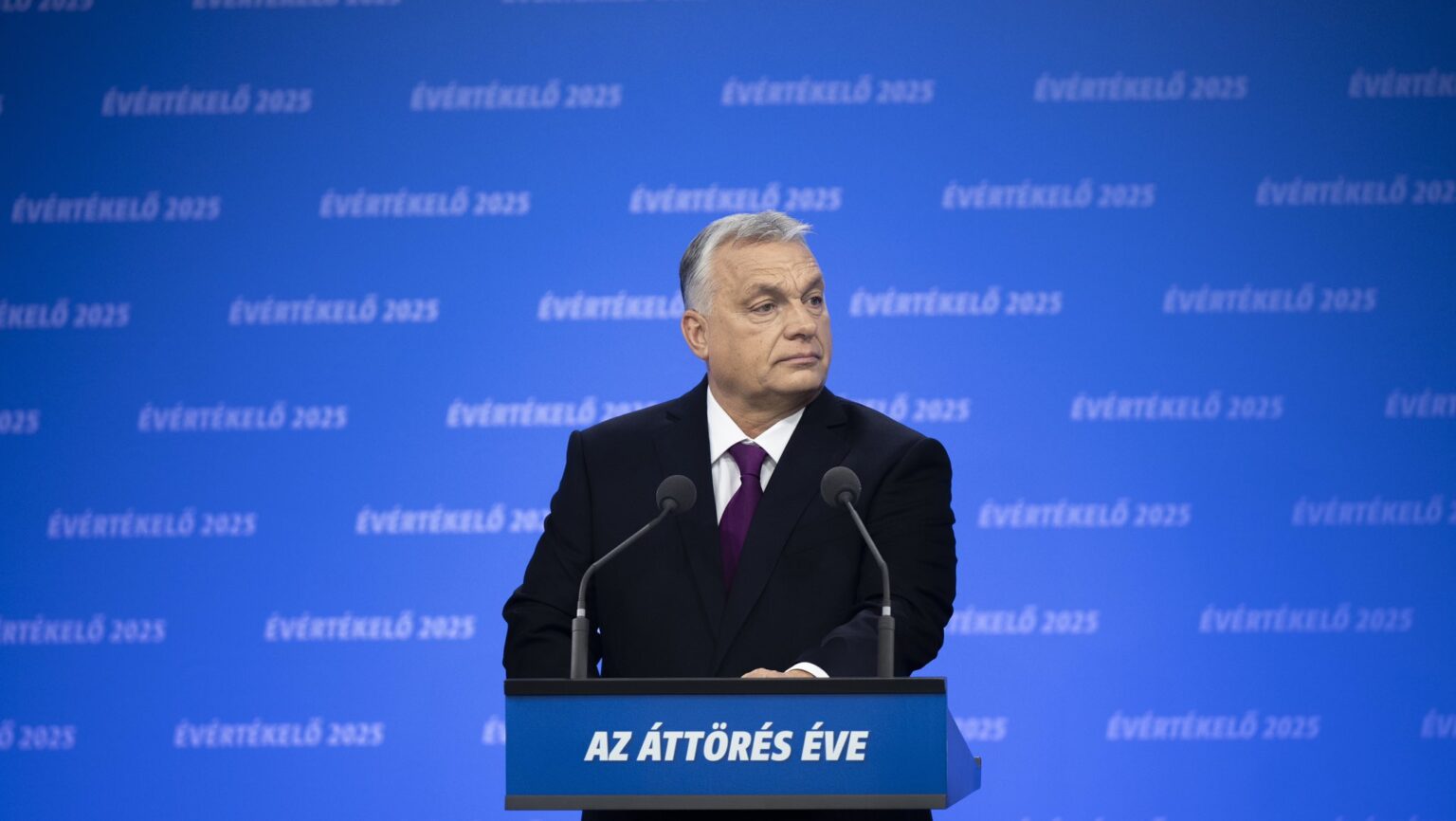
Prime Minister Viktor Orbán of Hungary highlighted his country’s 2016 migrant quota referendum in a GB News interview, arguing that direct democracy helped make migration a decisive political issue. A clip shared online by British activist Tommy Robinson drew strong engagement, with commenters praising Hungary’s approach compared to the UK.

Despite plans to ban Russian gas imports, EU countries purchased every shipment from the Yamal LNG facility in February, totalling 1.54 million tonnes. The record imports highlight the bloc’s ongoing dependence on Russian energy, even as Brussels pushes for sanctions and criticizes others for maintaining supply ties.

Donald Trump’s demand for allied warships in the Strait of Hormuz has exposed a stark transatlantic divide, with Washington ready to act decisively while Europe once again hesitates in the face of a mounting crisis.

The Hungarian government has extended the deadline for its national petition to 8 April, citing increased pressure from Ukraine and urging citizens to voice their stance on key issues including war financing and energy policy.

A candidate of Hungary’s opposition Tisza Party is facing backlash after delivering a graphic and disturbing ‘joke’ at a campaign rally, describing a fictional sexual scenario involving Prime Minister Viktor Orbán and an underage girl. The remarks, made in front of families and children, prompted immediate controversy and a public apology.

Kyiv has accused Russia of conducting a disinformation psyop targeting the Hungarian minority in Ukraine, allegedly in cooperation with Viktor Orbán’s government to influence Hungary’s upcoming election. Budapest rejected the claims, accusing Ukraine of interfering in domestic politics in support of Orbán’s opposition, as information warfare around the vote intensifies.

After winning the home fixture 2–0, Ferencváros lost 4–0 to SC Braga in their famous stadium built directly into the side of the Monte Castro quarry in Portugal. Thus, Braga advanced 4–2 on aggregate to the quarter-final of the UEFA Europa League, ending the otherwise impressive European campaign of the Hungarian champions.

Hungarian Minister of EU Affairs János Bóka has rejected claims circulating in Western media that Prime Minister Viktor Orbán would refuse to concede defeat in the 12 April election, arguing instead that it is in fact the opposition building a ‘stolen election’ narrative, supported by selective polling, unproven interference claims, and amplified by Western media outlets.

CPAC Hungary 2026, this Saturday, 21 March, will feature such illustrious guest speakers as Dave Rubin, Eva Vlaardingerbroek, Prime Minister Andrej Babiš of Czechia, and Former Prime Minister Mateusz Morawiecki of Poland.

Nuclear energy took centre stage at a Danube Institute event in Budapest, where experts such as Chair of the US Nuclear Regulatory Commission David A Wright and State Secretary for Circular Economy and Climate Policy at Hungary’s Ministry of Energy Csaba Gondola spoke of a ‘nuclear renaissance’ driven by energy security concerns. Speakers highlighted SMRs, though deployment is unlikely before 2030.

At a time when public debate is increasingly polarized and superficial, Hungarian Conservative remains committed to depth and independent thought.
Donate Now
Please consider supporting our mission.